

In a childhood increasingly mediated by screens and structured schedules, the raw, unfiltered experience of the natural world offers something irreplaceable. It’s a space for genuine problem-solving, unscripted adventure, and profound personal growth. When we talk about teaching children outdoor abilities, we’re not just talking about a fun hobby or a way to pass a summer afternoon.
We are talking about equipping them with a mindset of resilience, a deep-seated confidence, and an appreciation for the world that can only be learned by engaging with it directly. Here in the Swiss Alps, surrounded by some of Europe’s most majestic peaks, we’ve seen firsthand since 2008 how learning to read a landscape, build a shelter, or tie a life-saving knot can transform a child’s perspective on their own capabilities.
This isn’t about turning children into extreme survivalists. It’s about giving them the tools to feel comfortable, competent, and calm in unfamiliar environments. It’s about replacing fear of the unknown with curiosity and a quiet self-assurance. These are lessons that extend far beyond the forest trail; they are foundational skills for navigating life’s many challenges with creativity and courage.
Content
What modern kids gain from ancient skills
The abilities our ancestors used for daily survival have become powerful educational tools today. Moving beyond theoretical knowledge and into hands-on application allows children to connect with their environment and themselves in a meaningful way. They learn that they are capable of creating comfort, ensuring their safety, and working with nature, not against it. This process builds a type of confidence that is earned, not given.
Developing true problem-solving abilities
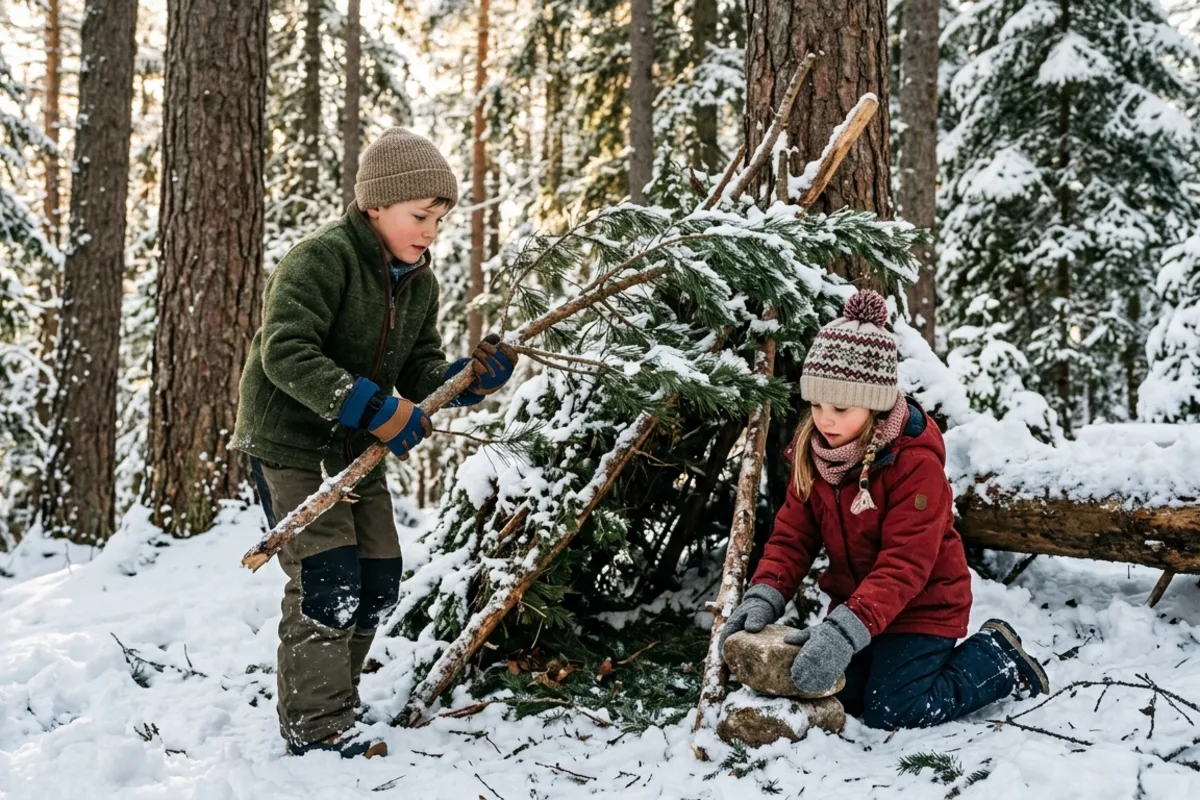
In the mountains, problems are tangible and immediate. If you’re cold, you need to figure out how to get warm. If you’re lost, you need to determine your location and find your way. We guide campers through these scenarios in a controlled, safe environment. For example, a common challenge is building a debris hut that can withstand a sudden mountain shower. This isn’t a theoretical exercise.
The children must work together to gather materials like fallen branches and moss, consider the slope of the ground for drainage, and weave a structure that is both stable and insulating. When they succeed, the reward isn’t a grade; it’s the genuine satisfaction of creating a dry, warm space with their own hands. They learn to analyze a situation, brainstorm solutions, test their ideas, and adapt when something doesn’t work. This iterative, practical approach to problem-solving is a skill they will use in every aspect of their lives.
Building resilience and emotional regulation
The alpine environment is beautiful but also unpredictable. A sunny morning can turn into a windy afternoon. A planned route might be blocked by a fallen tree. These are not failures; they are learning opportunities. We teach children to see these moments not as setbacks, but as prompts to reassess and adapt. When a child is struggling on a steep section of a trail, they learn to control their breathing, focus on their footing, and trust their teammates and leaders.
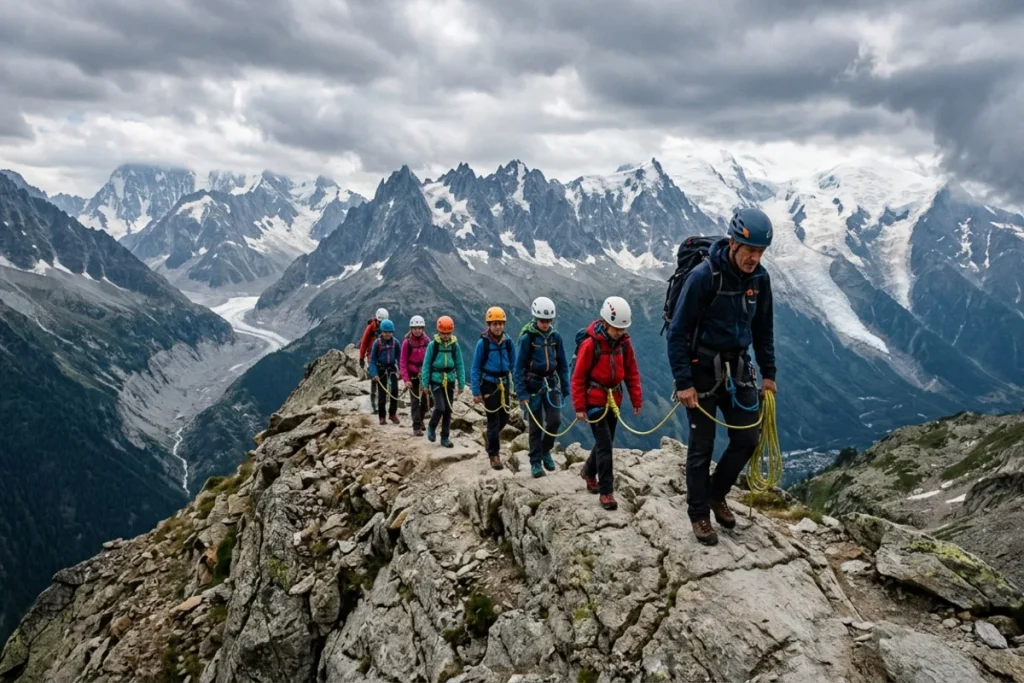
They discover a reserve of mental and physical strength they didn’t know they had. A parent once told us their shy, anxious son returned from camp a different person. He had faced his fear of heights on a via ferrata, and in doing so, realized that fear was something he could manage. He learned that discomfort is often temporary and that pushing through it leads to immense pride and a new sense of capability. This is resilience in action.
Fostering a deep connection to the natural world
You can’t truly appreciate something until you understand it. Teaching a child to identify edible wild plants, like wild strawberries or bilberries found on the trails around Saas-Fee, or to recognize the call of a marmot, transforms the forest from a green backdrop into a living, interactive world. They learn about the delicate balance of the alpine ecosystem and their role in preserving it through Leave No Trace principles.
This connection is not abstract; it’s built through sensory experiences—the smell of pine after rain, the feel of granite under their fingertips while climbing, and the taste of water from a pure mountain spring. This fosters a sense of stewardship and respect for the environment that lasts a lifetime, moving beyond simple enjoyment to active care and responsibility.
Core competencies of a youth outdoor skills camp
A well-structured program for teaching bushcraft for kids moves beyond simply being outdoors. It involves a progressive curriculum of practical skills that are age-appropriate, safe, and empowering. Each skill builds upon the last, creating a holistic understanding of how to thrive in a mountain environment. The goal is not just to teach isolated techniques but to cultivate a mindset of awareness, preparedness, and resourcefulness.
Shelter: The foundation of comfort and safety
The priority in any outdoor situation is securing shelter. It’s the core concept that protects from the elements and provides a psychological sense of safety. We begin with the basics, teaching children how to use a simple tarp and rope to construct effective A-frame or lean-to shelters. They learn about site selection—avoiding hazards like rockfall zones or low-lying areas prone to flooding—and how to orient their shelter to protect against wind and rain.
For older, more experienced campers, we advance to building natural debris huts using only materials found in the forest. This activity is a favorite, as it combines creativity, engineering, and teamwork. The children work in small groups, learning to communicate and collaborate to build a structure that is surprisingly weatherproof and well-insulated. It’s a powerful lesson in using the surrounding resources to meet a fundamental need.
Water and fire: The essentials of life
Next to shelter, understanding how to find, purify, and manage water is a critical survival skill. We teach children how to identify safe water sources, such as springs and fast-flowing streams, and the importance of never drinking untreated water in the wild. They get hands-on experience with various purification methods, from modern filters and purification tablets to more traditional techniques like boiling. This practical knowledge removes one of the biggest anxieties associated with the outdoors.
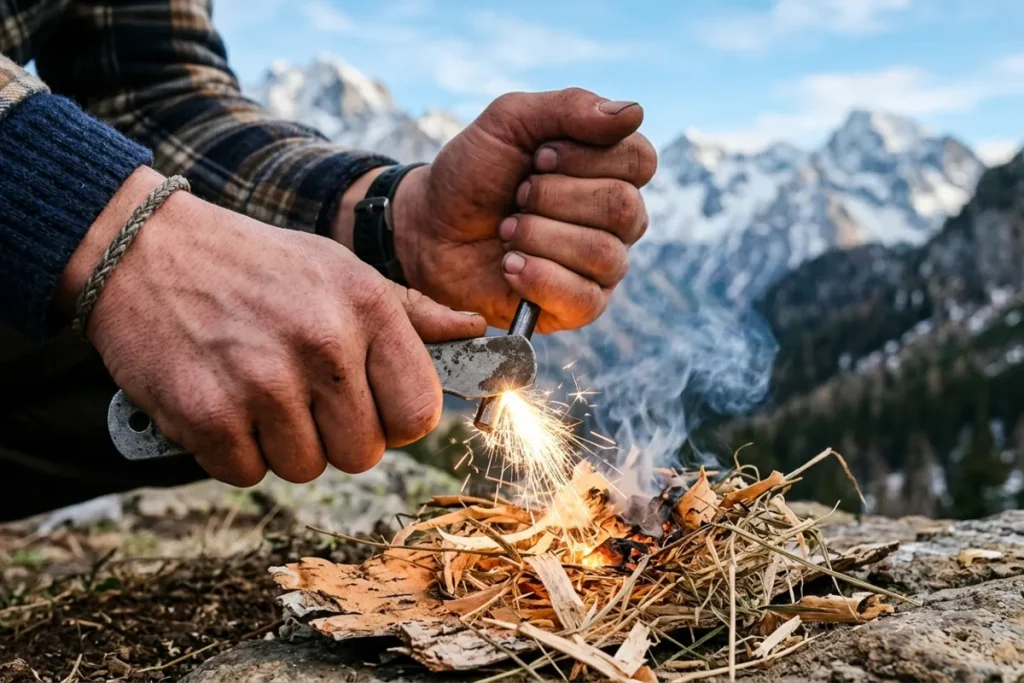
Fire is taught with the utmost respect and a heavy emphasis on safety. Children learn about the fire triangle (fuel, heat, oxygen) and practice fire-starting with various methods, from modern fire-strikers to the more challenging bow drill. They learn how to responsibly gather tinder, kindling, and fuel and how to build different types of fires for different purposes, such as cooking or signaling.
Crucially, they also learn how to manage a fire safely and how to extinguish it completely, leaving no trace behind. This is one of the most empowering skills we teach, as it represents a direct connection to a fundamental human technology.
Navigation and awareness: Knowing where you are and what’s around you
Moving safely through the mountains requires more than just following a trail. We cultivate what we call “mountain sense.” This starts with the basics of map and compass reading, a timeless skill that is more reliable than any GPS device. Children learn to orient a map, identify landmarks, and take bearings. But we go further, teaching them to read the landscape itself.
They learn to use the sun’s position to estimate direction and time, to identify weather patterns by observing cloud formations over the Mischabel range, and to recognize natural indicators that can help them find their way. This constant practice of observation sharpens their awareness, making them more attuned to their surroundings and less likely to get lost in the first place. The car-free nature of Saas-Fee provides a unique training ground where older kids can even practice their navigation skills independently within the village under our supervision, building confidence in a real-world setting.
Choosing the right program for your child
Not all outdoor programs are created equal. When entrusting your child’s safety and learning to an organization, it’s important to look for specific hallmarks of quality, experience, and a sound educational philosophy. A great program is built on a foundation of safety, led by experienced instructors, and designed to foster both skill acquisition and personal development.
The importance of experienced and multilingual leaders
The quality of any outdoor education program rests entirely on its leaders. They are not just instructors; they are mentors, role models, and safety managers. Look for leaders with extensive personal experience in the outdoors, as well as formal qualifications in wilderness first aid, mountaineering, and youth education. Since 2008, we’ve built our team around individuals who are not only technically proficient but also passionate about working with children.
They know how to break down complex skills into understandable steps, how to motivate a child who is feeling discouraged, and, most importantly, how to create a supportive and inclusive group dynamic.
In an international setting like the Swiss Alps, multilingual leaders are also a significant asset. Our camps are run entirely in English, providing an immersive language-learning environment. However, our leaders speak multiple languages (including German, French, and Italian), which allows them to clarify instructions and comfort a child in their native tongue if needed. This dual focus on language and practical skills creates a uniquely enriching experience.
Group size and learning environment
The ideal learning environment for these skills is a small, intimate group. A low camper-to-leader ratio (we maintain a maximum of 8-12 campers per group) is non-negotiable. This ensures that every child receives individual attention, guidance, and support. It allows leaders to tailor instruction to different skill levels and to closely supervise activities that require a high degree of safety, such as rock climbing or using a knife for carving.
Small groups also foster a stronger sense of teamwork and camaraderie. Children get to know each other well, learn to trust and rely on one another, and form friendships built on shared adventure. This is a stark contrast to large, impersonal camps where children can easily get lost in the crowd.
A philosophy of learning by doing
The most effective way to learn practical skills is by practicing them. A quality outdoor skills camp minimizes classroom-style instruction and maximizes hands-on experience. Children shouldn’t just be told how to build a shelter; they should build one. They shouldn’t just hear about different knot types; they should practice tying them until it becomes muscle memory.
Our philosophy has always been centered on this principle. We believe that real learning happens when children are actively engaged, experimenting, and even making mistakes in a safe context. This approach makes the learning more memorable and builds a deeper, more intuitive understanding of the concepts.
To help you compare, here is a look at what distinguishes a program focused on deep skill-building from a more general outdoor camp:
| Feature | Deep skill-building program | General outdoor camp |
|---|---|---|
| Instructional Focus | Progressive curriculum of specific, practical mountain survival techniques. | Broad range of recreational activities with light instruction. |
| Leader Qualifications | Certified experts in mountaineering, bushcraft, and wilderness first aid. | General camp counselors, often with basic first aid training. |
| Group Size | Small groups (typically under 12) for personalized attention and safety. | Larger groups, which can limit individual instruction. |
| Learning Method | Emphasis on hands-on, problem-based learning and skill repetition. | Primarily activity-based participation. |
| Primary Outcome | Measurable competence in outdoor skills, increased resilience, and self-reliance. | Fun, recreation, and general exposure to the outdoors. |
Integrating skills into a week of adventure
The best way to solidify new abilities is to use them in the context of a real adventure. A week-long Bushcraft Camp provides the perfect timeframe to introduce, practice, and apply a range of skills in a fun and engaging way. The journey becomes the classroom, and every day presents new opportunities for learning and growth.
A typical day in the Alps
Our days are structured but flexible, allowing us to adapt to the weather and the group’s energy levels. A typical day might start after breakfast with a “skill of the day” session. This could be anything from learning to tie essential knots like the bowline and clove hitch to practicing first aid for common outdoor injuries like blisters and scrapes.
This focused learning is then immediately put into practice. For example, after the knot-tying session, we might head out for a rock climbing or abseiling activity where the children use those very knots to secure themselves. The learning is immediate and relevant.
Afternoons are dedicated to adventure. This could be a hike to a glacier, crossing a gorge on a zip line, or navigating to a hidden waterfall using a map and compass. Throughout these activities, we are constantly reinforcing the day’s lesson and weaving in other elements of mountain craft.
The day ends back at our base, where we might practice some wood carving around a campfire or simply share stories from the day’s adventure, all conducted in English to reinforce language skills.
Combining English learning with outdoor education
For many families, the opportunity for their children to improve their English is a key consideration. We have found that the most effective language learning happens when it is integrated into an activity that children are genuinely passionate about. When a child needs to ask for help while building a shelter or explain their strategy for navigating, they are motivated to find the right words. The language is not an academic subject; it’s a tool for communication and collaboration.
- Immersive environment: All instructions, conversations, and activities are conducted in English, creating a natural and constant exposure to the language.
- Contextual vocabulary: Children learn and use vocabulary that is directly relevant to their activities—words for tools, plants, animals, and actions. This makes the words more memorable.
- Building confidence: Speaking a new language can be intimidating. In our supportive, small-group setting, children feel more comfortable taking risks and practicing their English without fear of judgment. The shared focus on the activity reduces the pressure of language performance.
From day-drop-ins to week-long immersions
We understand that every family has different needs and schedules. That’s why we offer a range of options, from single-day drop-in adventures to full week-long residential camps. A day program is a fantastic way to introduce a younger child (we welcome kids from age 5) to the outdoors or for a family on vacation in Saas-Fee to add a unique adventure to their trip. These days are packed with exciting activities like zip-lining or a first introduction to shelter building.
The week-long camps, available for kids up to age 16, allow for a much deeper immersion. Over the course of a week, we can build a progressive curriculum where skills are layered day by day. This extended time allows for more complex projects, longer expeditions, and the development of strong group bonds. It’s in these week-long programs that we see the most significant growth in a child’s confidence, independence, and technical abilities.
The skills learned during a week in the mountains are not left behind on the last day of camp. They become a part of who the child is. The confidence gained from successfully navigating a trail, the patience learned while trying to start a fire with a bow drill, and the friendships forged through shared challenges—these are the true souvenirs of an authentic outdoor experience. They are the building blocks of a capable, confident, and resilient young adult.
If you believe in giving your child the gift of real-world skills, confidence, and a lifelong connection to nature, our alpine adventures are waiting. We invite you to give them an experience that goes beyond a simple vacation. To see your child grow in ways you never expected is the ultimate adventure. Ready to learn more? Book a place at our summer camp in Saas-Fee, or contact us to ask about age groups, dates, and availability for next summer.