
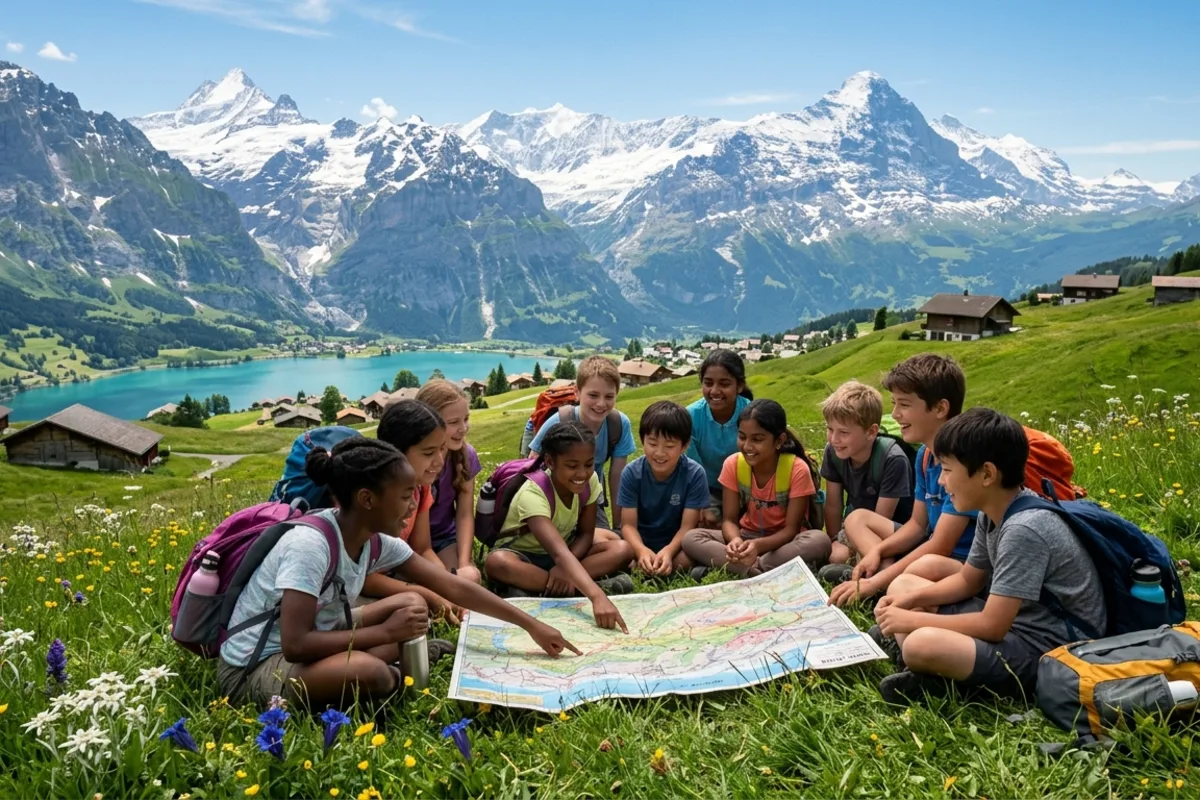
Parents often look for summer programs that offer more than just a way to pass the time. They seek experiences that will shape their children, build their character, and equip them with skills that extend far beyond a traditional classroom setting. A summer spent learning a new language is valuable, but a summer spent living that language while navigating a mountain trail, building a shelter, or learning to tie a figure-eight knot for a rock climb is transformative.
This is the core philosophy behind experiential learning in the outdoors: children don’t just memorize information; they absorb it through action, problem-solving, and teamwork.
For over a decade, we’ve seen this transformation firsthand here in the heart of the Swiss Alps. When a child successfully lights a fire with a flint and steel for the first time or helps their team navigate back to base using a map and compass, the sense of accomplishment is profound. These are not abstract lessons from a textbook. They are tangible achievements that build genuine self-reliance and confidence.
The English they use to communicate with their teammates and leaders during these challenges isn’t just an academic exercise; it’s a necessary tool for collaboration and success. This immersive approach is what turns a good summer into a pivotal growth experience, creating memories and skills that last a lifetime.
Choosing the right program is about finding a place where your child will be safe, challenged, and inspired. It’s about an environment that encourages curiosity and resilience, where making new friends from different cultures is as much a part of the curriculum as learning to identify edible plants. In a setting like the Alps, the mountains themselves become the teachers, offering lessons in perseverance, respect for nature, and the rewards of pushing one’s own boundaries under the careful guidance of experienced mentors.
Content
What real learning looks like in an alpine environment
The concept of using the outdoors as a classroom is not new, but its power remains unmatched. When children are removed from the structured, often passive, environment of a school and placed in a dynamic, natural setting, their learning processes change. Their senses are engaged, their bodies are active, and their minds are focused on immediate, practical challenges. This active engagement is the foundation of deep, lasting learning and personal development.
Fostering independence in a safe, structured setting
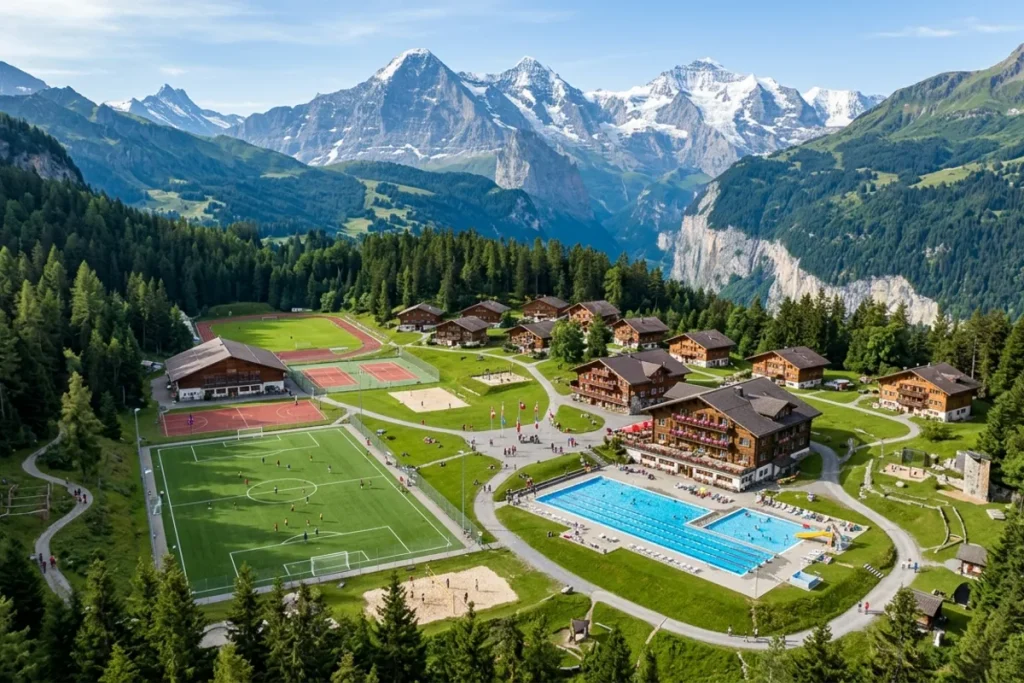
One of the greatest gifts a summer program can offer is the chance for a child to develop independence. In a carefully supervised environment, children can learn to make decisions, manage their own gear, and take responsibility for their role within a team. Our base in Saas-Fee is a unique advantage in this regard. As a car-free village, it provides a safe, pedestrian-friendly space where campers can experience a degree of freedom rarely found elsewhere.
Under the watchful eyes of our leaders, they might be tasked with navigating to the local bakery to pick up fresh bread for the group or leading a short walk back to our chalet. These small acts of independence are huge steps in building self-trust. They learn to rely on themselves and their teammates, understanding that their contributions matter to the success of the group. This isn’t a simulated exercise; it’s real-life responsibility with tangible outcomes, like enjoying the bread they successfully procured for everyone’s lunch.
Language learning that feels like play, not work
Traditional language classes often struggle to bridge the gap between knowing vocabulary and using it confidently in conversation. An immersive outdoor camp erases that gap. Here, English is not the subject; it’s the medium.
When a group of children from Spain, Italy, and Germany need to work together to assemble a zipline or decide on the best location for a shelter, they must communicate in their common language: English. The desire to share an idea, ask for help, or celebrate a success becomes a powerful, natural motivator for speaking.
Our leaders, all multilingual but running sessions entirely in English, facilitate this process not by correcting every grammatical error but by modeling clear communication and encouraging participation. The learning is seamless and contextual.
A child learns the word “tinder” because they need it to build a fire, not because it’s on a vocabulary list. This is why our campers’ conversational fluency and confidence often improve more in a few weeks than in a year of formal classes.
Building resilience one challenge at a time
The mountains are excellent teachers of resilience. Not every attempt to light a fire will succeed on the first try. A rock climbing route might seem intimidating from the bottom. The weather might turn, requiring a quick change of plans. These are not failures; they are learning opportunities. Our role as educators is to guide children through these challenges, helping them to analyze what went wrong, adapt their strategy, and try again.
When a child who was hesitant at the start of a via ferrata reaches the end, beaming with pride, they have learned a powerful lesson: they are more capable than they thought. They learn that perseverance pays off and that it’s okay to feel nervous as long as you don’t let that fear stop you. This process of facing and overcoming manageable, age-appropriate risks is fundamental to building the mental and emotional toughness that will serve them in all aspects of life.
The skills that matter: Beyond academics
While academic achievement is important, many parents recognize that success in life depends on a much broader set of skills. The ability to collaborate, to lead, to solve problems creatively, and to connect with others from different backgrounds are qualities that define well-rounded, capable individuals. An adventure-focused summer program is an ideal incubator for these essential life skills.
Teamwork and collaborative problem-solving
Building a weatherproof shelter that can fit an entire team is a complex task. It requires more than just physical effort; it demands communication, planning, and compromise. One camper might be good at finding sturdy branches, another might have a knack for weaving a waterproof roof from natural materials, and a third might be the one to keep the team organized and focused. In our small groups, typically with a maximum of 8-12 campers, every child has a voice and a role to play.
Our leaders guide them to recognize each other’s strengths and work together effectively. They learn to listen to different ideas, to negotiate a plan, and to share the workload. These collaborative projects—whether it’s cooking a meal over an open fire or navigating a complex trail—teach the practical mechanics of teamwork in a way no classroom project ever could.
Developing leadership and communication skills
Leadership isn’t about being the loudest or the strongest. It’s about inspiring trust, communicating a vision, and empowering others. We create daily opportunities for campers to practice these skills in a low-stakes environment. A child might be designated as the “map-reader” for the day, responsible for communicating the route to the rest of the group. Another might lead the morning gear check, ensuring everyone has their water, snacks, and rain jacket.
Our leaders provide the framework and support, but the campers are the ones who step up. They learn to speak clearly, to give and receive constructive feedback, and to take initiative. In a multicultural summer camp setting, this becomes even more significant, as they learn to communicate effectively across cultural and linguistic differences, fostering a global perspective and a deeper sense of empathy.
A deep and lasting connection with nature
In an increasingly digital world, many children have limited opportunities to connect with the natural environment. A summer spent in the Alps changes that. They learn to see the forest not just as a collection of trees but as a source of food, shelter, and medicine. They learn to identify animal tracks, to understand the signs of changing weather, and to appreciate the intricate balance of the mountain ecosystem. This is not a passive appreciation; it’s an active, hands-on relationship.
They learn the “Leave No Trace” principles because they come to respect the environment they are living in. This connection fosters a sense of stewardship and responsibility. A child who has slept in a shelter they built themselves or tasted water from a pure mountain spring develops a profound and personal appreciation for the natural world that a documentary or a textbook can never replicate.
Choosing the right camp: What to look for
When selecting a summer program for your child, especially one abroad, the decision-making process can feel overwhelming. Safety, staff quality, program philosophy, and location are all critical factors. Understanding what sets a great camp apart from a good one can help you make a confident choice that aligns with your family’s values and your child’s needs.
The importance of experience and local knowledge
A camp’s longevity and its connection to the local area are strong indicators of its quality and reliability. A program that has been operating in the same location for many years, like our Bushcraft Camps, which started in Saas-Fee in 2008, has an intimate knowledge of the terrain, the weather patterns, and the best-suited spots for every activity. This expertise is not just about finding the most scenic trails; it’s a cornerstone of safety and program quality.
We know which climbing routes are best for beginners after a rainfall, where to find the best wild berries in late July, and how to adjust our plans seamlessly based on the valley’s famously reliable, yet occasionally unpredictable, microclimate. This deep-rooted local knowledge allows us to offer authentic adventures that are both thrilling and meticulously managed for risk.
Low leader-to-camper ratios and staff expertise
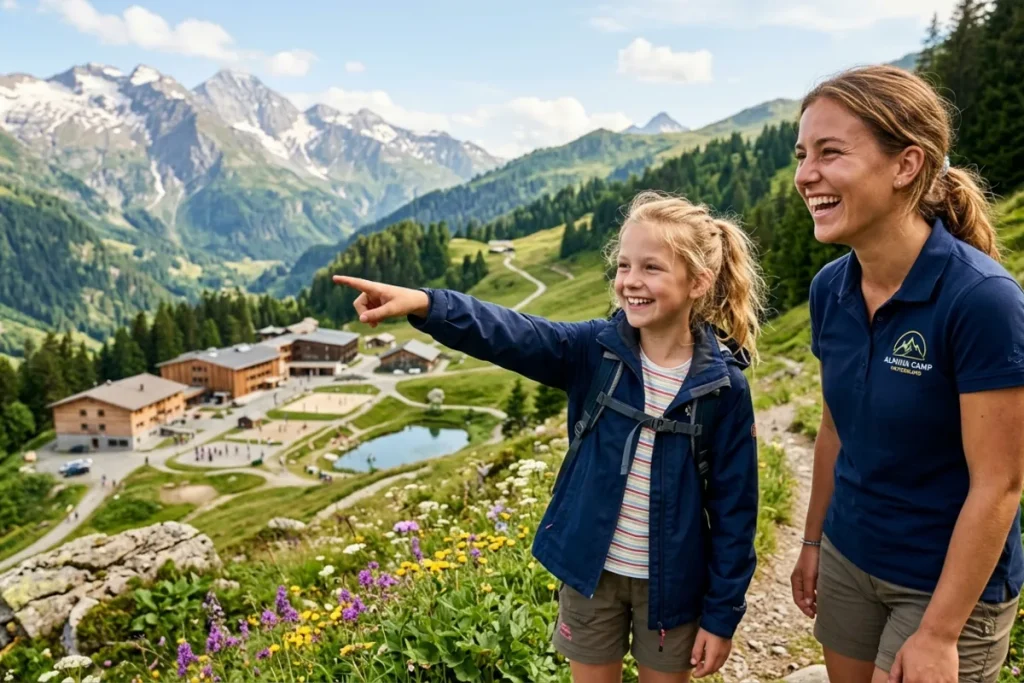
The single most important element of any camp is the quality of its staff. Leaders should be more than just supervisors; they should be mentors, teachers, and role models. Look for programs that prioritize small group sizes. A low leader-to-camper ratio (we maintain a maximum of 8-12 campers per group) ensures that each child receives individual attention, support, and instruction. It allows leaders to get to know each camper’s personality, strengths, and areas for growth. Furthermore, inquire about the staff’s qualifications.
Our leaders are not just fluent English speakers; they are experienced mountain educators, certified climbers, and skilled bushcraft practitioners. They are chosen for their expertise, their passion for working with children, and their ability to create a supportive and motivating atmosphere where every child feels capable of success.
A philosophy of active, hands-on learning
Consider the camp’s core philosophy. Is the program built around a series of disconnected activities, or is there a coherent educational vision? The most impactful programs are those built on a philosophy of active, experiential learning. This means the focus is on “doing” rather than “watching.” Children should be active participants in every aspect of the day, from planning the route to cooking the food.
This approach is what differentiates a simple activity holiday from a true developmental experience. It’s the difference between being a passenger and being a member of the crew. An English speaking summer camp in Europe should offer more than just language practice; it should provide a platform for personal growth through shared challenges and real-world application of skills.
| Feature | Traditional classroom-based camp | Adventure-based immersive camp |
|---|---|---|
| Learning environment | Indoors, structured classroom, seated learning. | Outdoors, dynamic alpine environment, active learning. |
| Language practice | Formal lessons, grammar drills, and structured conversation. | Immersive, contextual use of language for real-world tasks. |
| Skill development | Primarily academic and linguistic skills. | Holistic: practical survival skills, teamwork, leadership, resilience. |
| Source of confidence | Academic achievement, and test scores. | Overcoming physical and mental challenges, and successful teamwork. |
| Peer interaction | Structured group work, and social time during breaks. | Constant collaboration on meaningful, goal-oriented projects. |
A summer of growth in the Swiss Alps
Bringing all these elements together—a philosophy of learning by doing, a team of expert leaders, and a world-class natural setting—creates an unparalleled opportunity for growth. The experience of attending an international summer camp in Switzerland is about more than just the activities themselves. It’s about the cumulative effect of daily adventures, new friendships, and newfound capabilities.
Building a global community
When children from different countries and cultures come together to share an adventure, they learn one of life’s most important lessons: that despite our differences, we have much in common. They share stories around the campfire, learn words in each other’s languages, and build friendships based on shared experiences, not shared backgrounds.
These international camps for kids foster a sense of global citizenship and understanding that is difficult to cultivate in a more homogenous environment. Campers leave not just with new skills but with a new perspective on the world and their place in it. They return home with an address book (or, more likely, a list of social media contacts) full of friends from across the globe.
Creating lasting memories and a love for the outdoors
Years from now, campers may not remember the specific grammar rule they learned, but they will remember the feeling of reaching the top of a climbing wall, the taste of a meal they helped cook over a fire, and the sound of laughter echoing through the valley with their new friends. These are the formative memories that shape a person’s character and passions.
Our goal is not just to provide a fun week but to spark a lifelong love for adventure, a respect for the natural world, and an enduring belief in their own abilities. The confidence gained from successfully navigating a mountain trail can translate into the confidence needed to tackle a difficult project at school or stand up for what they believe in.
Why Saas-Fee is the perfect base for adventure
The location of a camp is not just a backdrop; it’s an integral part of the experience. Saas-Fee and the surrounding Valais region offer a unique combination of stunning high-alpine scenery, accessibility, and safety.
Surrounded by some of the highest peaks in Europe, the valley provides a spectacular and inspiring playground for our activities. The sunny microclimate ensures we have reliable weather for our adventures, with warm days perfect for being active and cool nights ideal for resting.
The car-free nature of the village, as we saw earlier, is a significant factor, allowing for a safe and peaceful environment where the focus remains on community and nature. This combination of world-class natural features and thoughtful village planning makes it an exceptional place for children to explore and grow.
The journey of personal growth is a continuous one, but certain experiences can serve as powerful catalysts. A summer spent in the mountains, engaged in meaningful challenges and surrounded by a supportive community, is one of those experiences. It’s an investment in your child’s confidence, independence, and global perspective.
If you’re ready to give your child a summer of real adventure, genuine learning, and unforgettable memories, we’re here to make it happen. Our programs are designed to be more than just a camp; they are a stepping stone to a more confident and capable future. Book a place at our summer camp in Saas-Fee, or contact us to ask about age groups, dates, and availability for next summer.